A Belarusian Film Criticism of the 2020s
Between (Self-)Censorship and Sincerity
DOI:
https://doi.org/10.17892/app.2026.00022.423Keywords:
Belarusian cinema, film criticism, censorship, exile, authoritarianism, media environmentAbstract
Belarusian film criticism in the 2020s exists in a fragmented and precarious state shaped by authoritarian control, censorship, exile, and the collapse of cultural continuity. The author demonstrates that the country’s political environment, marked by repression after the 2020 protests, participation in the war against Ukraine, and long-standing state control over culture, has deeply transformed the conditions under which film critics operate. Within Belarus, official film criticism largely functions as an ideological tool that supports state narratives, particularly through the glorification of Soviet-era cinema and the promotion of new productions by the national studio. At the same time, independent critics either avoid discussing Belarusian cinema or work from exile, where they face new challenges: limited access to films, fear among filmmakers to communicate with journalists, anonymity due to security concerns, and shrinking funding opportunities. Drawing on personal experience, the author shows how critics must navigate underground screenings, restricted distribution, and strained relationships with filmmakers who remain in Belarus. As a result, Belarusian film criticism survives through scattered initiatives, online platforms, and diaspora media, but its future remains uncertain. The text concludes that the survival of Belarusian film criticism as a public institution depends on broader political and geopolitical developments in Eastern Europe.
Беларуская кінакрытыка 2020-х: паміж (сама)цэнзурай і шчырасцю
Беларуская кінакрытыка 2020-х гадоў знаходзіцца ў фрагментаваным і нестабільным стане, які вызначаецца аўтарытарным кантролем, цэнзурай, вымушанай эміграцыяй і разрывам культурнай пераемнасці. Аўтар паказвае, што палітычныя падзеі апошніх гадоў – падаўленне паслявыбарных пратэстаў 2020 года, узмацненне ўнутраных рэпрэсій і ўдзел Беларусі ў вайне супраць Украіны – істотна змянілі ўмовы працы кінакрытыкаў. Унутры краіны кінакрытыка прадстаўлена пераважна праўладнымі даследчыкамі і журналістамі, чыя дзейнасць накіравана на абслугоўванне ідэалагічных патрэбаў дзяржавы: падтрымку міфа пра Другую сусветную вайну і прасоўванне новых праектаў нацыянальнай кінастудыі. Незалежныя ж аўтары часта альбо пазбягаюць беларускага кантэксту, альбо працуюць з-за мяжы, дзе сутыкаюцца з іншымі праблемамі: абмежаваным доступам да фільмаў, страхам аўтараў у Беларусі кантактаваць з журналістамі, неабходнасцю ананімнасці і змяншэннем фінансавых магчымасцяў. На аснове асабістага досведу аўтар апісвае, як кінакрытыка існуе праз нефармальныя паказы, інтэрнэт-платформы і медыя ў выгнанні. У выніку яна застаецца шматаблічнай, але ўразлівай практыкай, будучыня якой залежыць ад далейшага развіцця палітычнай і геапалітычнай сітуацыі ў рэгіёне.
Ключавыя словы: беларускае кіно; кінакрытыка; цэнзура; эміграцыя; аўтарытарызм; медыяпрастора.
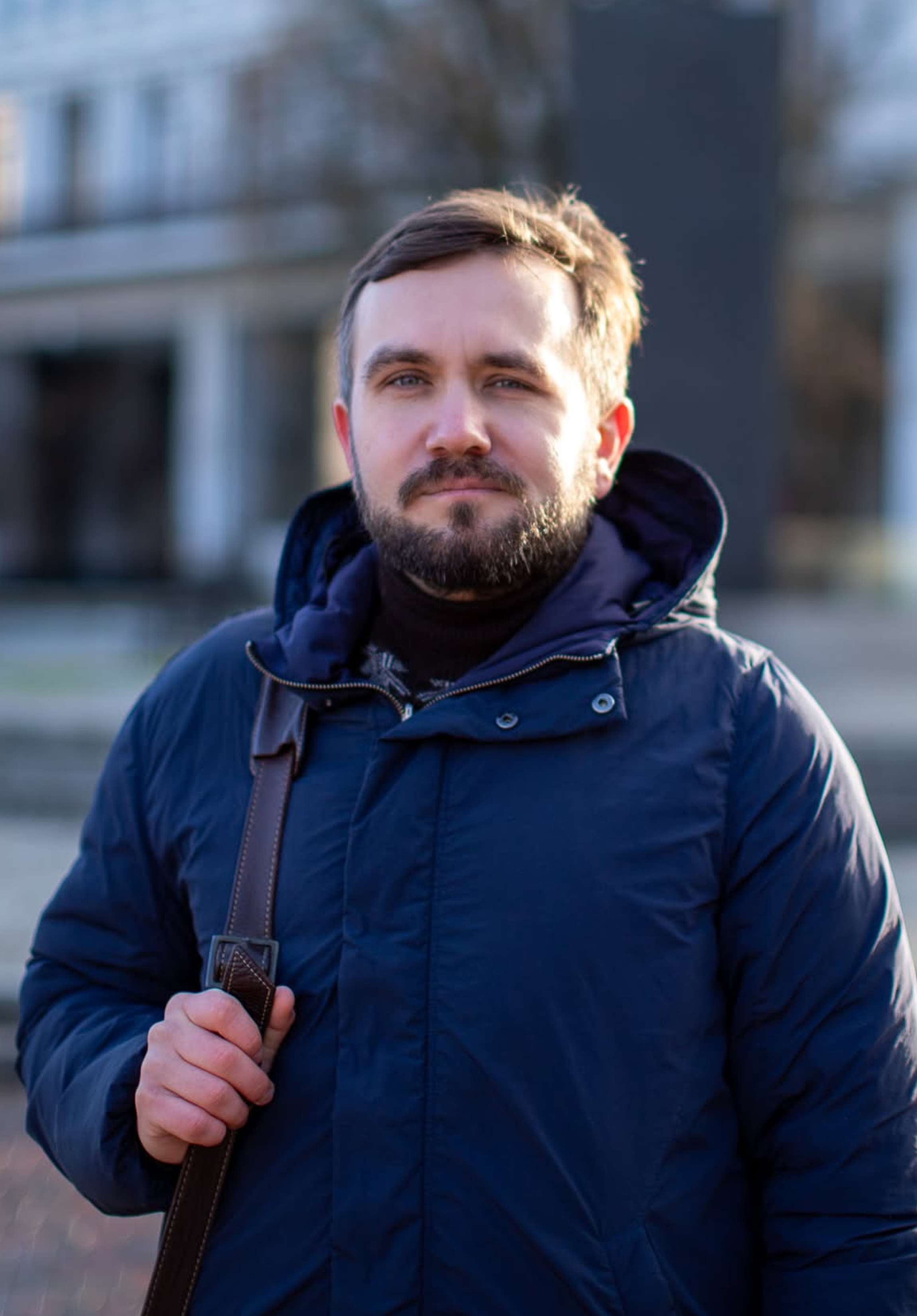
Photo: Taras Tarnalitsky (Credit: Dzianis Vasilkou)
Downloads
Published
How to Cite
Issue
Section
License
Copyright (c) 2026 Apparatus. Film, Media and Digital Cultures of Central and Eastern Europe

This work is licensed under a Creative Commons Attribution 4.0 International License.
The articles in Apparatus are published under https://creativecommons.org/licenses/by/4.0/ This license does not apply to the media referenced, which are subject to the individual rights owner's terms.
The authors hold the copyright without restrictions and retain publishing rights without restrictions.